
How to Mop Floors Properly – Complete Guide
Sara IdenforsMop the floors the traditional way with a mop or mop head

How to do it
Step 1
Start by putting things away and then vacuuming. It is very important to vacuum first; otherwise, the dirt will be moved around and the result will not be good at all. In the worst case, you may even scratch the floors with grit that has been dragged into the mop.

Step 2:
Fill a mop bucket with warm water. Add enough water for it to ALMOST reach the wringer (the small basket at the top of the mop bucket). Add soap. If you are unsure whether soap is suitable for your floor— read our blog here about which products are suitable for different floors. If you use the wrong amount or too much soap, the floor may become streaky or sticky.

Step 3:
Use a freshly washed mop or mop head. There are many different options to choose from. We recommend choosing one that can be washed and reused many times. Now wet the mop in the bucket containing water and soap; it should be completely soaked before you wring it out thoroughly. Spin the mop in the wringer and press down.

Step 4:
Start at the far end of the room and mop toward the door using sweeping movements. Use the mop as you would a dishcloth, sweeping up dirt and dust. Loose dirt and dust should be swept up, not thrown or pushed around the room.
Step 5:
Place the mop back in the mop bucket and soak it thoroughly. Then hold the handle between your hands and roll it around so that the mop head spins vigorously in the bucket—this removes as much dirt as possible. Wring it out in the wringer and mop again.

Step 6:
If your floor is very dirty, you may need to change the water and add more soap. Very dirty floors may require repeating this step several times. Remember to always mop your way out of the room so that you do not have to walk over the part of the floor you have already mopped.
Step 7:
Do not use too much water on sensitive floors, as they may be damaged. Parquet is one example.
Step 8:
Start with the bedrooms and kitchen. Then clean the hallway, and the bathroom last. Clean around the toilet bowl absolutely last; this prevents any bacteria from being transferred from the bathroom to the kitchen.
Step 9:
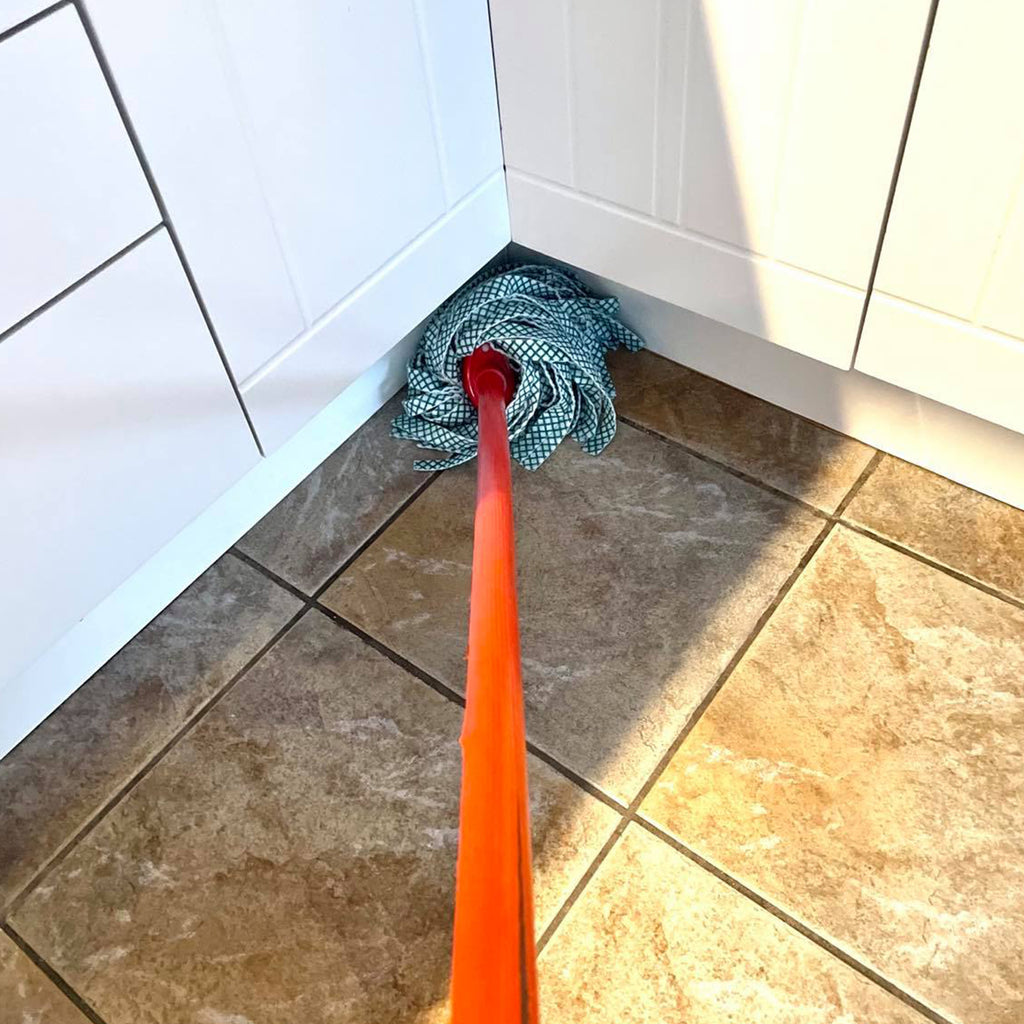
Corners can be tricky. If you cannot get the dirt out of the corners, twist the freshly rinsed mop into the corner and push it into the corners to dislodge the dirt.
Step 10:
Then wash the mop, preferably after every time you mop. If you skip this step, at least rinse the mop thoroughly and let it dry. Never leave the mop wet at the bottom of the bucket, as it can sour and bacteria may start to grow.
