
Juniper-Scented Soap, Traditional Solid, 230 ml


Juniper-Scented Soap, Traditional Solid, 230 ml
Juniper-Scented Soap, Traditional Solid, 230 ml
Unable to load pickup availability


About the Product
When it comes to tougher stains and ingrained dirt, our traditional solid soap comes in handy. It effectively dissolves even the most stubborn oven stains and cleans outdoor surfaces with the help of a scrubbing brush or ecofiber cloth.
Solid soap is even more concentrated and saves the environment from unnecessary transportation of water, while also taking up less storage space.
The container is made of cardboard and contains solid, concentrated soap that effectively dissolves stains and is naturally antibacterial. The spruce scent was developed using spruce bushes from Västerbotten as inspiration.
If you open the container, close it, and leave it somewhere that is perhaps a little warm or cold, the soap may change shape. If you do not want it to change shape, we recommend transferring it to an airtight container. The cardboard container should be regarded as transport packaging; once opened, any unused soap should be transferred to a soap dish (see image) or another container. An airtight container helps the soap retain its consistency and color.
Read more about how to use solid soap: https://vasterbottenssapa.se/blogs/stadguiden/hur-man-anvander-fast-och-flytande-sapa
Usage
Recommended for cleaning:
- Greasy dirt on kitchen surfaces (oven, extractor fan, sink, etc.)
- Natural materials (wood, stone)
- Carpets
- Barbecues, oven racks, baking trays
- Tough stains on clothing
- Cast iron and frying pans
- Tiles
Useful tips:
- After opening the package, the soap may dry slightly on the surface. It is still just as effective, but may need to be moistened slightly before use.
- If you open and close the container and leave it somewhere that is perhaps a little warm or cold, the soap may change shape. If you do not want it to change shape, we recommend transferring it to an airtight container. The cardboard container should be considered transport packaging. Once opened, any unused soap should be transferred to a soap container (see image) or another vessel. An airtight container helps the soap retain its consistency and colour.
- Apply a dab of solid soap to a sponge or scrubbing brush to remove even the toughest stains.
- The contents correspond to 1 litre of liquid soap.
Information
Specification:
- Packaging: 230 ml, recyclable cardboard packaging.
- If you open the package, close it, and leave it somewhere perhaps a little warm or cold, it may change shape. If you do not want it to change shape, we recommend transferring it to an airtight container.
- Solid, concentrated soap: recycled, purified and pre-saponified cooking oil (vegetable), water.
Read more about the contents here
Safety tips:
- Do not leave unrinsed soap on the floor, as it may cause slipping.
- Not for consumption! Store separately from food.
- Store at room temperature.
- Keep out of reach of children.
- Do not use on surfaces painted with linseed oil paint.
- Keep out of reach of children and heat sources.
If you are unsure about how to use the product, contact us at info@vasterbottenssapa.se. For the ingredient list, see the respective product's main page.
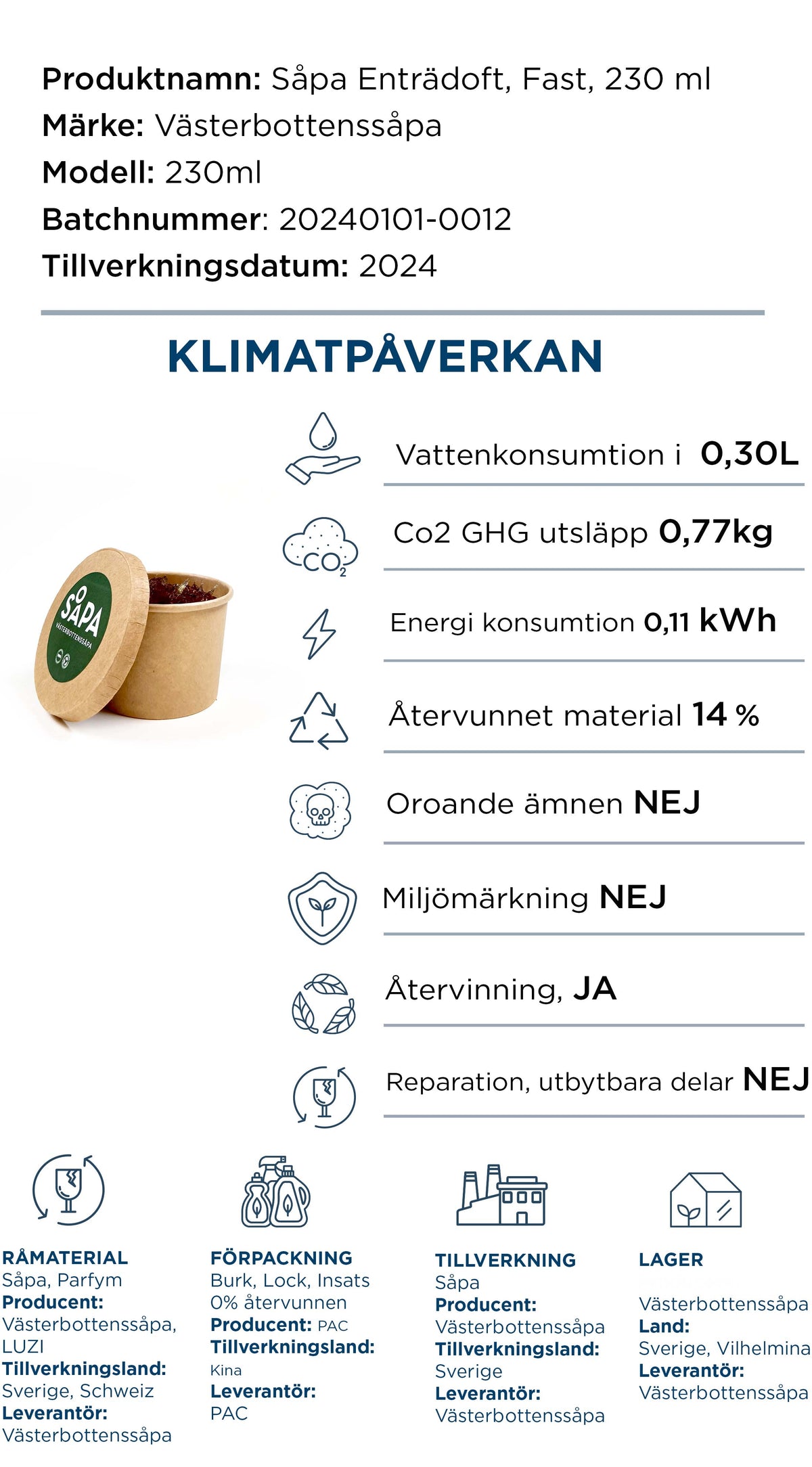
Produktpass
-

Natural & Reused Ingredients
-

Free from Toxins, Parabens, and Preservatives
-

All our products are manufactured in Vilhelmina, Västerbotten.
-

Refills made from “Prevented Ocean Plastic”


What sets Västerbottenssåpa apart from “ordinary” soaps bought at the grocery store?
-

Canola oil is produced as a food product
-

Rapeseed oil is used by restaurants throughout the country.
-

Västerbottenssåpa sources the oil that is purified at the small factory in Vilhelmina. It is then saponified into soft soap.
-

The soap will be mailed to you.


